

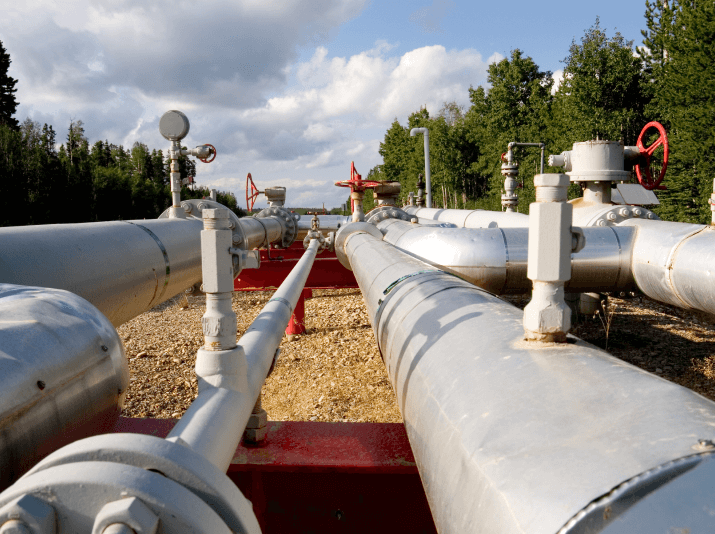
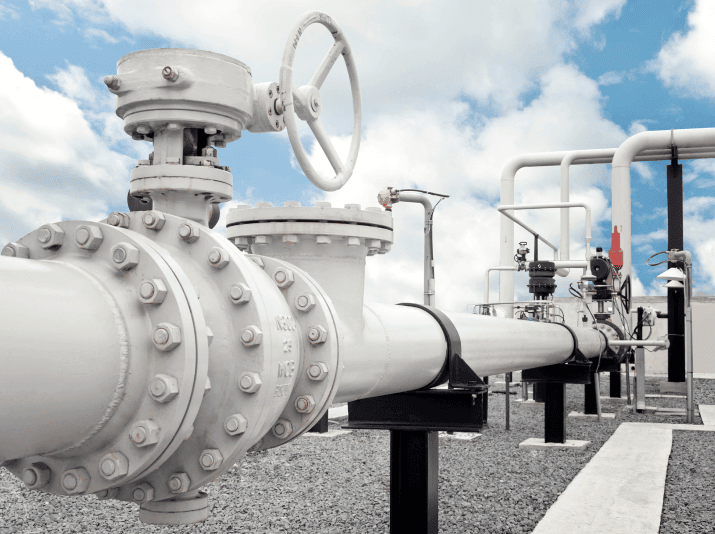


The American School of Gas Measurement Technology (ASGMT) has never turned its back on change since its founding in 1966. Instead, it has consistently embraced progress and pursued new ways to strengthen our industry and support the development of our students. This year is no exception. After 25 years at our previous venue, ASGMT has proudly relocated to The Woodlands Waterway Marriott Hotel and Conference Center. This move underscores our continued commitment to remaining at the forefront of industry evolution and delivering the highest‑quality experience for our students and the broader measurement community.

School

September 13th – 16th, 2027

Papers

CONSIDERATIONS FOR SAMPLING WET, HIGH PRESSURE, AND SUPERCRITICAL NATURAL GAS

This paper discusses the problems encountered when sampling wet, high pressure and supercritical natural gas for “on-line”
BTU analysis and provides solutions and comments on how they relate to the API and GPA industry standards for natural gas
sampling. It also discusses the use of phase diagrams in the design and operation of a natural gas sampling system.

AUDITING GAS ANALYSIS LABS

The data produced by Gas Chromatograph (GC) laboratories is used for many purposes, including product specification,
accounting, safety and environmental compliance issues. The accuracy of this data has direct impact on all of these areas.
Auditing laboratories responsible for producing this data is prudent business practice.

EFFECTS AND CONTROL OF PULSATION IN GAS MEASUREMENT

One of the most common measurement errors and the most difficult to identify in natural gas metering systems is that caused
by pulsating flow. It is important to understand the effects that pulsations have on the common types of flow meters used in
the gas industry so that potential error-producing mechanisms can be identified and avoided.

FUNDAMENTALS OF GAS TURBINE METERS

The majority of all gas measurement used in the
world today is performed by two basic types of
meters, positive displacement and inferential.
Positive displacement meters, consisting mainly of
diaphragm and rotary style devices, generally
account for lower volume measurement. Orifice,
ultrasonic and turbine meters are the three main
inferential class meters used for large volume
measurement today.

Cyber Security in OT

Advancement in technology has no doubt given us an edge in making our lives better and more
productive. We can preempt health related concerns by providing diagnoses before they
become an issue. We can extract natural resources with more efficiency and with less impact
to the environment. We are even able to access conferences and lecture materials remotely in
the comfort of our homes.

FUNDAMENTALS OF ELECTRONIC FLOW METER DESIGN, APPLICATION & IMPLEMENTATION

Electronic flow measurement as applied to the natural gas industry has advanced considerably over the last 30 years.
Applications to address Upstream, Midstream and Downstream gas measurement technologies have become more complex.
Over time it has become necessary to understand the fundaments that make up this ever-changing environment.

FLUID FLOW CONDITIONING FOR METER ACCURACY AND REPEATABILITY

Flow conditioning is one of the most critical aspects dealing with any type of volumetric flow metering. Flow
conditioning is the final buffer between the flow meter and the upstream piping layout and is responsible for eliminating
swirl, restoring flow symmetry and generating a repeatable, fully developed velocity flow profile.

Coming soon
