

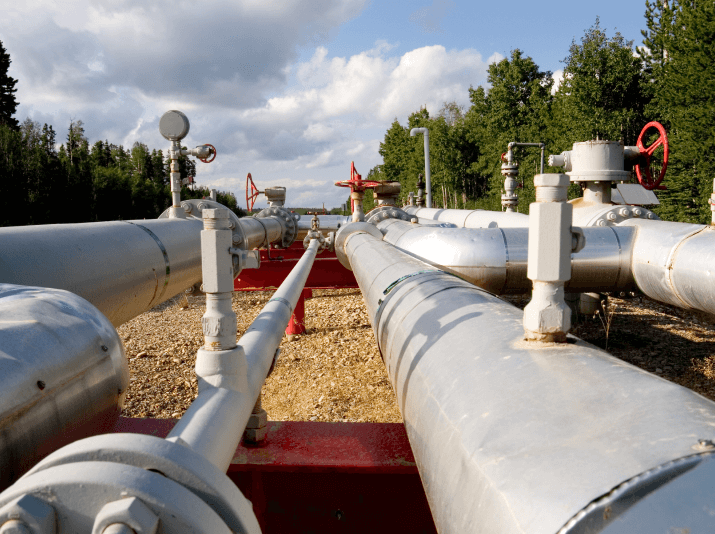
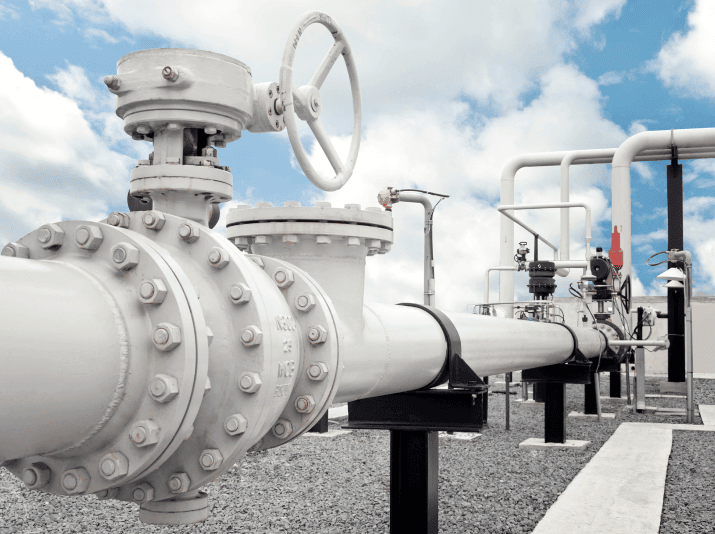


The American School of Gas Measurement Technology (ASGMT) has never turned its back on change since its founding in 1966. Instead, it has consistently embraced progress and pursued new ways to strengthen our industry and support the development of our students. This year is no exception. After 25 years at our previous venue, ASGMT has proudly relocated to The Woodlands Waterway Marriott Hotel and Conference Center. This move underscores our continued commitment to remaining at the forefront of industry evolution and delivering the highest‑quality experience for our students and the broader measurement community.

School

September 13th – 16th, 2027

Papers

FUNDAMENTAL PRINCIPLES OF DIAPHRAGM DISPLACEMENT METERS

INTRODUCTION The first gas company in the U.S., The Gas Light Company of Baltimore, Maryland, founded in 1816, struggled for years with financial and technical problems while operating on a “flat rate” basis. Its growth was slow with the charge for gas service beyond the pocketbook of the majority.

ULTRASONIC METERS FOR RESIDENTIAL AND COMMERCIAL APPLICATIONS

INTRODUCTION An ultrasonic meter falls into the classification of inferential meters. Unlike positive displacement meters that capture volume to totalize volume, inferential meters measure flowing gas velocity to totalize volume. Orifice meters use pressure drop to measure velocity to infer volume and turbine meters use the speed of the rotor to measure velocity to infer …

ULTRASONIC METERS FOR RESIDENTIAL AND COMMERCIAL APPLICATIONS Read More »

FIELD TESTING BY TRANSFER PROVING

INTRODUCTION Transfer proving was initially developed to provide an easier and more accurate field meter proving method. Because of the capacity capabilities of transfer provers (2000 CFH to 80,000 CFH) transfer provers are utilized in meter shops where bell prover capacity is limited and allow for shop testing of the larger capacity meters.

PROTECTION OF NATURAL GAS MEASUREMENT EQUIPMENT AGAINST MOISTURE AND CORROSION

INTRODUCTION The natural gas industry relies very heavily on sensitive electronic equipment utilized in the production, gathering, transportation, and distribution phases. There is an increasing reliance on the use of electronics for performing important tasks relating to measurement, control, and safety. Coupled with increased reliance is the demand by users for increased reliability.

FUNDAMENTALS OF PRESSURE RELIEF VALVES IN NATURAL GAS INSTALLATION – OPERATION – MAINTENANCE

What Are They and Why Are They Needed What: A stand-alone device that opens and recloses at a pre-selected pressure, containing an orifice sized to flow a required capacity to prevent / avoid overpressure. Why: All natural gas equipment (pipelines, pressure vessels, air-cooled heat exchangers, compressor cylinders, odorant tanks, instrument control lines, valves, underground storage, …

FUNDAMENTALS OF PRESSURE RELIEF VALVES IN NATURAL GAS INSTALLATION – OPERATION – MAINTENANCE Read More »

Field Inspection and Calibration of Volume Correcting Devices

INTRODUCTION Timely, diligent field testing and calibration of gas volume recording and correcting Instruments ensure that measurement Information fairly represents actual volumes. The Instruments save a company capitol and operating costs because they can record or integrate volumes at pressures and temperature above the normal pressure- base conditions specified In contracts for volume calculation. This …

Field Inspection and Calibration of Volume Correcting Devices Read More »

FIELD DATA CAPTURE WITHOUT PAPER FORMS

Meter inspections, configuration changes, calibration verification, troubleshooting, and gas sampling generate important subsets of measurement data. Automated computer systems capture, process, store, and report this data better than manual, paper-based systems minimizing effort, time, resources, and error for field and office workers

Coming soon